
Routing and mixing
The set mixer
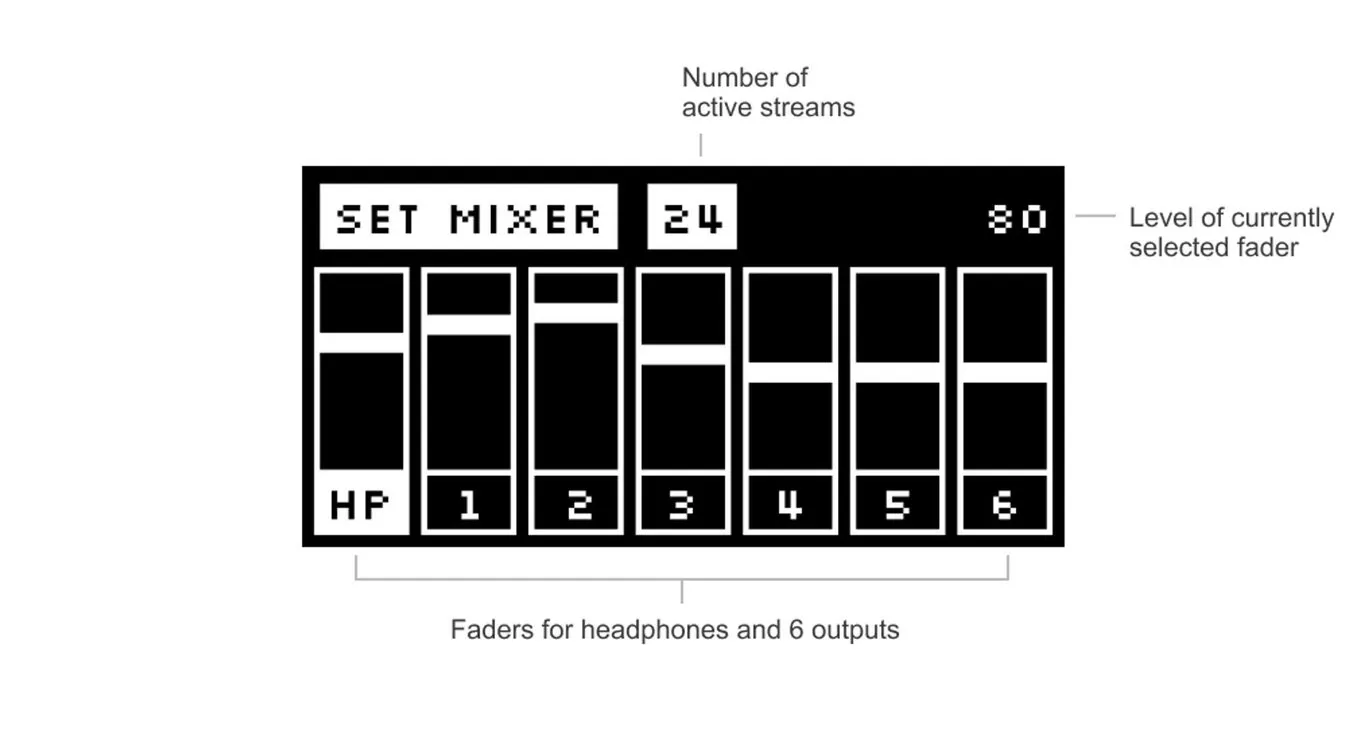
Section titled “The set mixer”The P-1 has a ‘Set Mixer’ to adjust the volumes of the 6 mono outputs and stereo headphones out for their live set. You can also stereo link pairs of outputs here. These settings are applied for the whole setlist, and are saved with the setlist. On firmware v3.27 or later, turn the right encoder on the player screen to adjust headphone level without opening the mixer. The current level appears briefly in the top-right of the display.
Output submixes
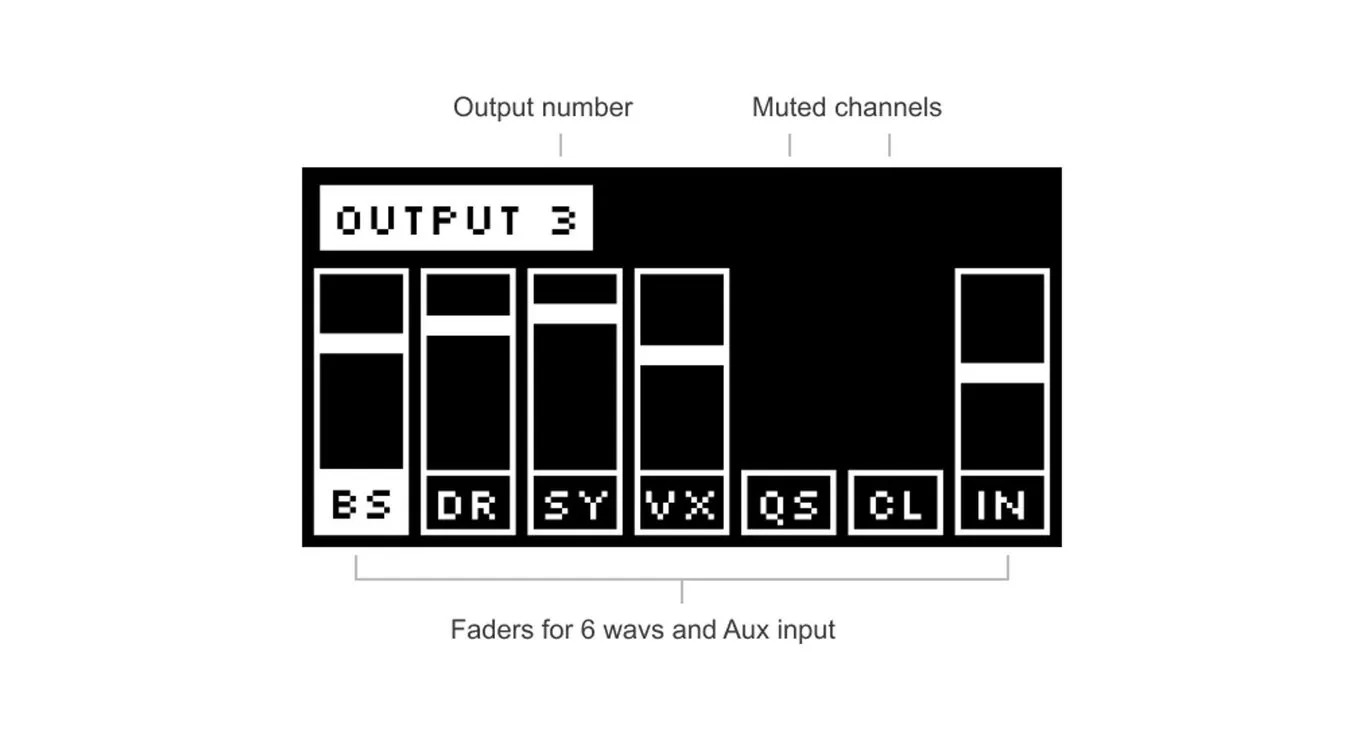
Section titled “Output submixes”The P-1 also has a mixer for the independent submix going to each output and for the headphones. Using this mixer, you can set the levels of the WAV files and aux input going to this particular output. You can also mute and unmute them. These settings are saved as part of a song.
Stereo linking outputs
Section titled “Stereo linking outputs”If you route a stereo source to one of the mono outputs, then the signal is summed to mono. To keep WAV files in stereo, outputs can be linked, which converts them to a stereo pair. Their faders will move together in the set mixer, and they will also share a source mixer. When a pair of outputs are linked, any mono WAV files routed to the first output are now sent to both outputs. Any stereo sources that were connected to the first output are now split to left channel and right channel across the stereo pair. Outputs are linked using the set mixer and apply for the whole setlist. Possible pairings are: outputs 1(L)+2(R), outputs 3(L)+4(R) and outputs 5(L)+6(R).
Sound sources and connections
Section titled “Sound sources and connections”Many musicians will simply want to send one WAV file to each output, which is easy to do. However, with the P-1, it is also possible to create more complex routings and custom mixes for each output, for things like sending a click to the drummer with a different headphone mix.
There are 7 available sound sources that can be routed to an output (6 WAV files + 1 aux input). The aux input is a mono source. WAV files can be either mono or stereo sources.
There can be a total of 32 connections between the sound sources and the outputs activated in a song.
- If you route a mono source to a mono output, it will use 1 connection.
- If you route a mono source to a pair of linked outputs, or the headphones output, it will use up 2 connections.
- If you route a stereo source to an output, or a pair of linked outputs, or the headphones output, it will use up 2 connections.
- Note that any source (mono or stereo) routed to the headphones takes 2 connections, one for left and one for right.
- If a channel is muted, then it does not count as using any connections until it is unmuted.
To use our earlier example, if you were to route a mono WAV of bass to output 1, a mono WAV of synths to output 2, then create a submix to the headphones containing bass, synths, click and the guitar from the aux input, you would be using 10 connections in total (8 to headphones, 2 to the other outputs). This would leave you with 22 more connections available if needed.
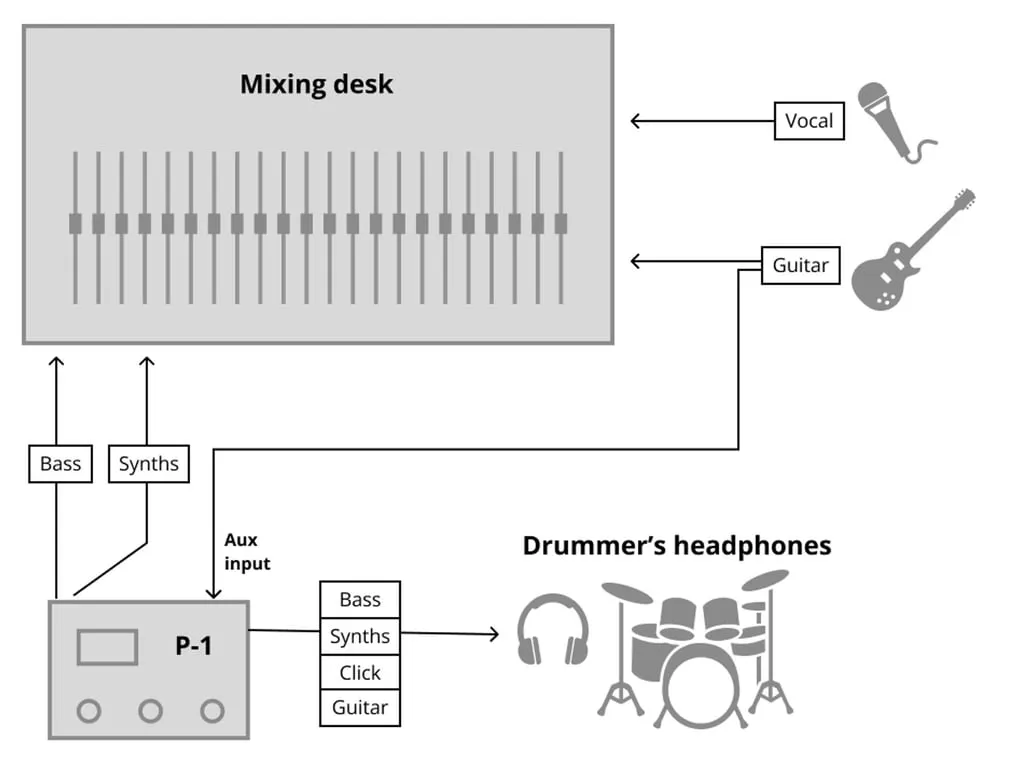
P-1 sending to mixing desk, and a submix to drummer’s headphones. 10 connections are active.
Clipping warning indicator
Section titled “Clipping warning indicator”Routing a lot of loud sound sources to the same output may cause it to clip, causing distortion.
If you see numbers 1-6 or LR flashing on the bottom left of the screen during playback, this means that output is clipping. The number represents the output, L and R represent the left and right channel of the headphones.
Identify the output that is clipping then turn down the faders within that output’s submix until it is no longer clipping.
Opening and closing the mixer
Section titled “Opening and closing the mixer”Open mixer
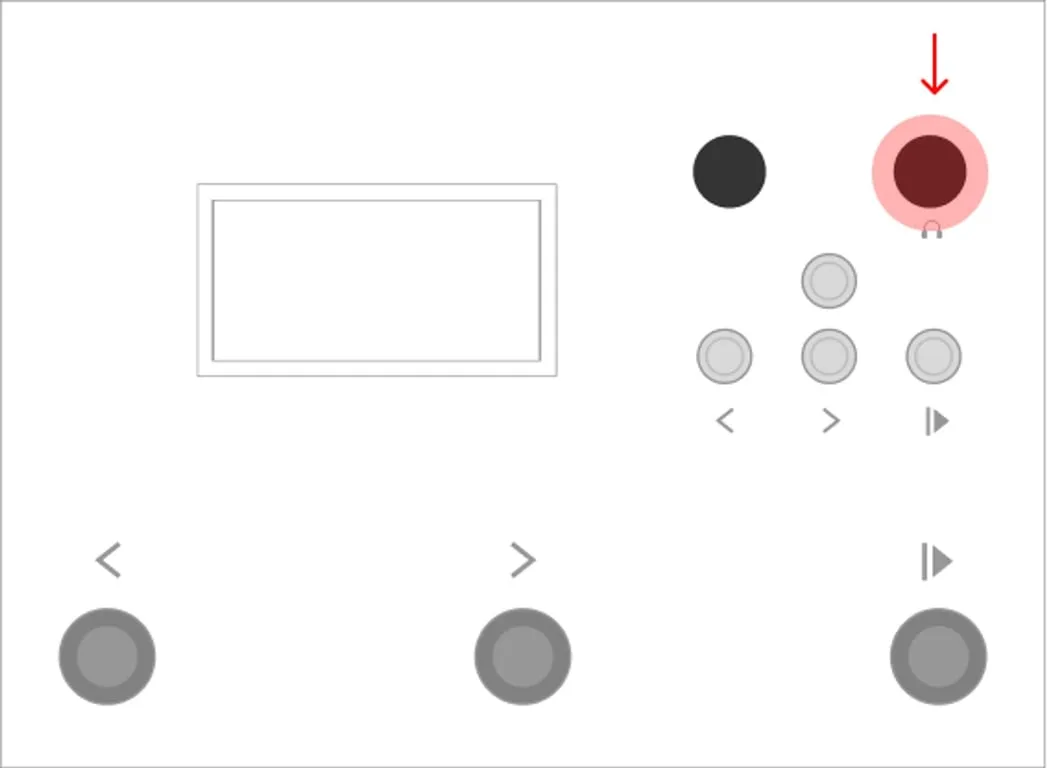
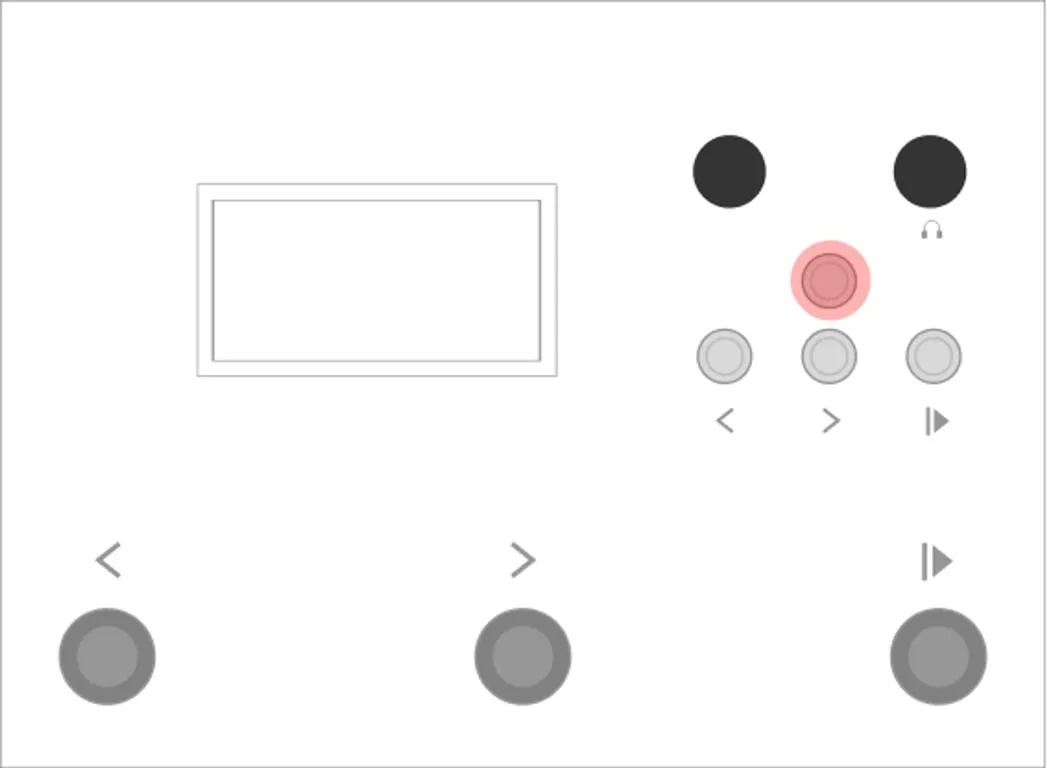
Section titled “Open mixer”Pushing right encoder opens the mixer and enters the device into MIX MODE. From this state, you can still pause and unpause the current track using the PLAY/PAUSE button.
Close mixer
Section titled “Close mixer”Pressing the EXIT button exits MIX MODE and asks if you want to save the changes. Select ‘Yes’ to save them, or ‘No’ to discard them.
Selecting a mixer
Section titled “Selecting a mixer”Cycle through mixers
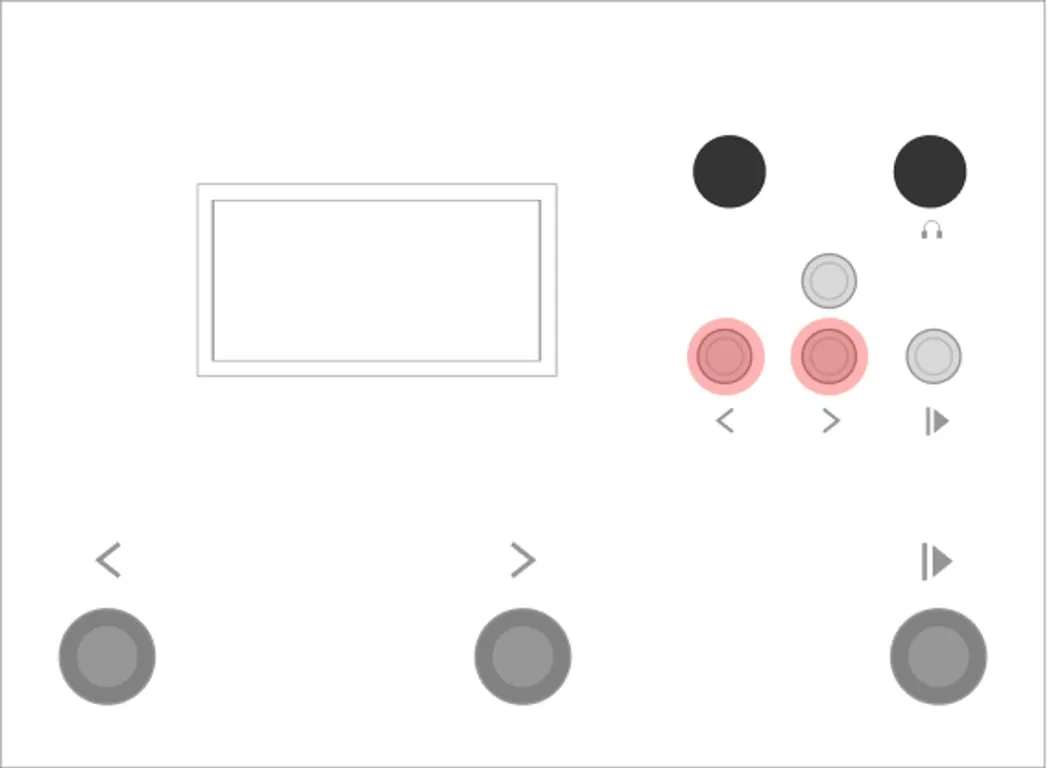
Section titled “Cycle through mixers”Pressing NEXT and PREVIOUS buttons cycles through the available mixers. Starting with the set mixer, and then each output’s own submix mixer.
Changing a fader value
Section titled “Changing a fader value”Cycle through faders
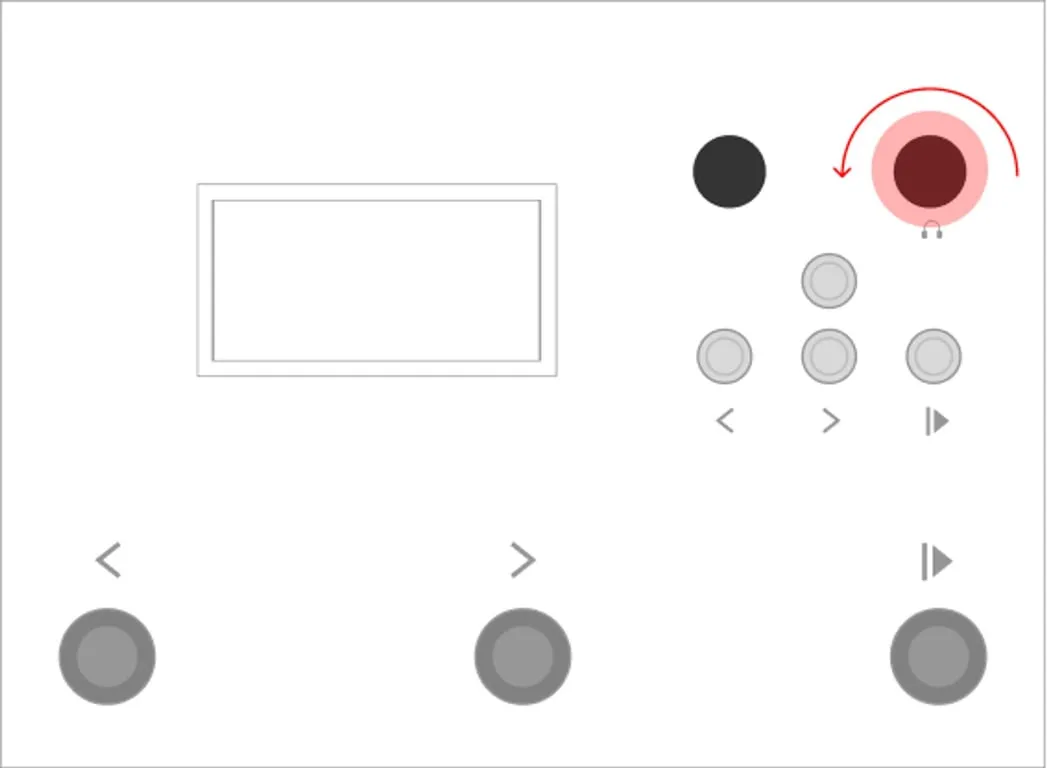
Section titled “Cycle through faders”Turning right encoder when in MIX MODE cycles through faders in the displayed mixer.
Grab fader
Section titled “Grab fader”Pushing right encoder selects the fader for editing.
Adjust fader
Section titled “Adjust fader”Turning right encoder when a fader is grabbed will adjust the fader value.
Release fader
Section titled “Release fader”Pushing right encoder again releases the fader and goes back to fader selection mode.
Muting and stereo linking
Section titled “Muting and stereo linking”Muting an output source
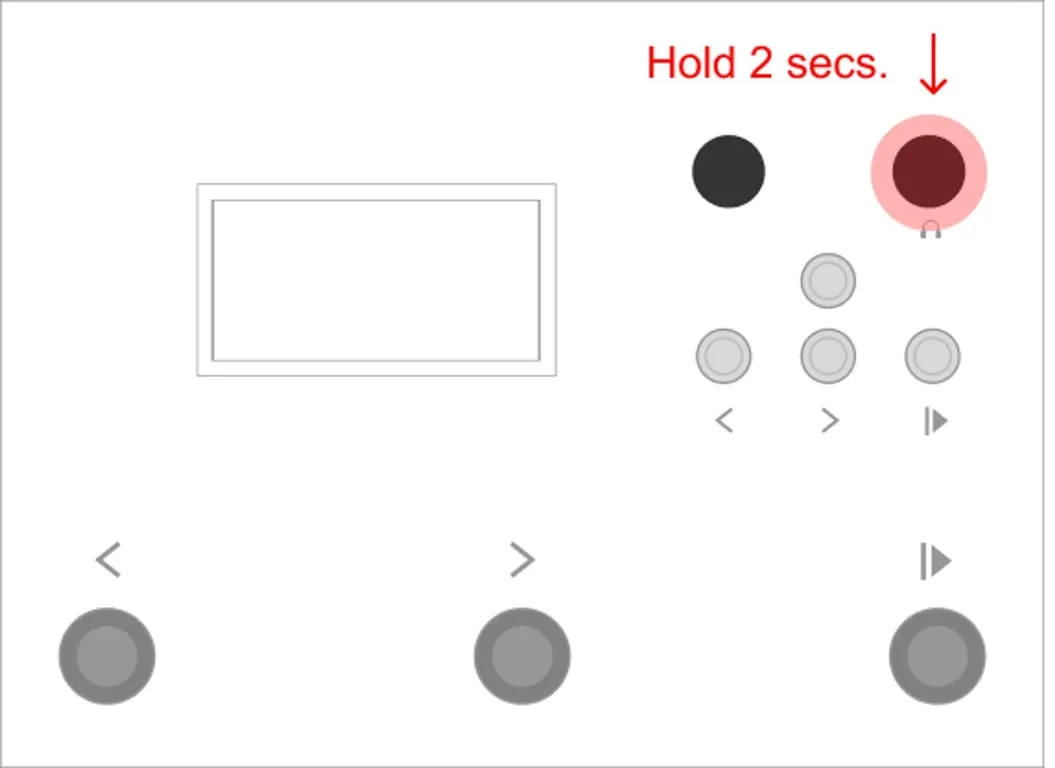
Section titled “Muting an output source”On a source mixer screen for one of the outputs, hold down the right encoder for 2 seconds to mute that channel. The fader will disappear indicating it is muted. Hold again for 2 seconds to unmute.
Stereo link outputs
Section titled “Stereo link outputs”On the set mixer, hold down the right encoder for 2 seconds to stereo link that channel with the left / right one. Hold again for 2 seconds to unlink. Possible pairings are outputs 1(L)+2(R), outputs 3(L)+4(R) and outputs 5(L)+6(R).